July 16, 2026 by Clarissa Ayala
Lone Star Legal Aid’s Dana Karni Helps a Harris County Mother After a Car Purchase Goes Wrong
For La Keycha Buckner, a Harris County mother, buying a car was supposed to make life easier. She needed reliable transportation to get to work, take her daughter to school, and handle the everyday responsibilities of caring for her family.
But just a day or two after buying a used vehicle, she realized something was wrong with it. The car broke down, leaving Ms. Buckner without transportation and out all of the money she spent on a downpayment. The dealership made it expensive and nearly impossible for Ms. Buckner to get repairs done to the car she had barely driven for a few days. As she tried to understand why a vehicle she had just purchased was already having such serious problems, Ms. Buckner learned that it had previously been involved in a major wreck. Her problems with the dealership only continued from there. Eventually, the dealership repossessed the car from her, and then it withheld her personal belongings from the car.
Without a reliable car, she had to depend on Uber to get to work and take her daughter to school. The cost quickly became overwhelming. Some days, she missed work because the cost of taking an Uber there and back was so high that it made more sense financially to stay home.
The situation was stressful. She was losing income, spending money on transportation, and trying to figure out what to do about a car she had just purchased. At the same time, she still had to make sure her daughter got to school and that their family’s daily needs were met.
She researched where could get help on Google and found Lone Star Legal Aid. Her case was accepted and she was connected with Litigation Director Dana Karni. She was relieved to have an attorney who could help her understand her rights and take on the legal fight for her.
Dana learned that the used car dealer had misrepresented the vehicle’s condition, meaning the client did not receive accurate information about the car she was buying. Under Texas consumer protection laws, sellers generally cannot use false, misleading, or deceptive practices to convince someone to make a purchase. A buyer may have legal options when a seller lies about a vehicle’s condition or fails to disclose a major problem the seller knew about. The dispute also involved the client’s rights to money she had paid toward the vehicle after it was repossessed.
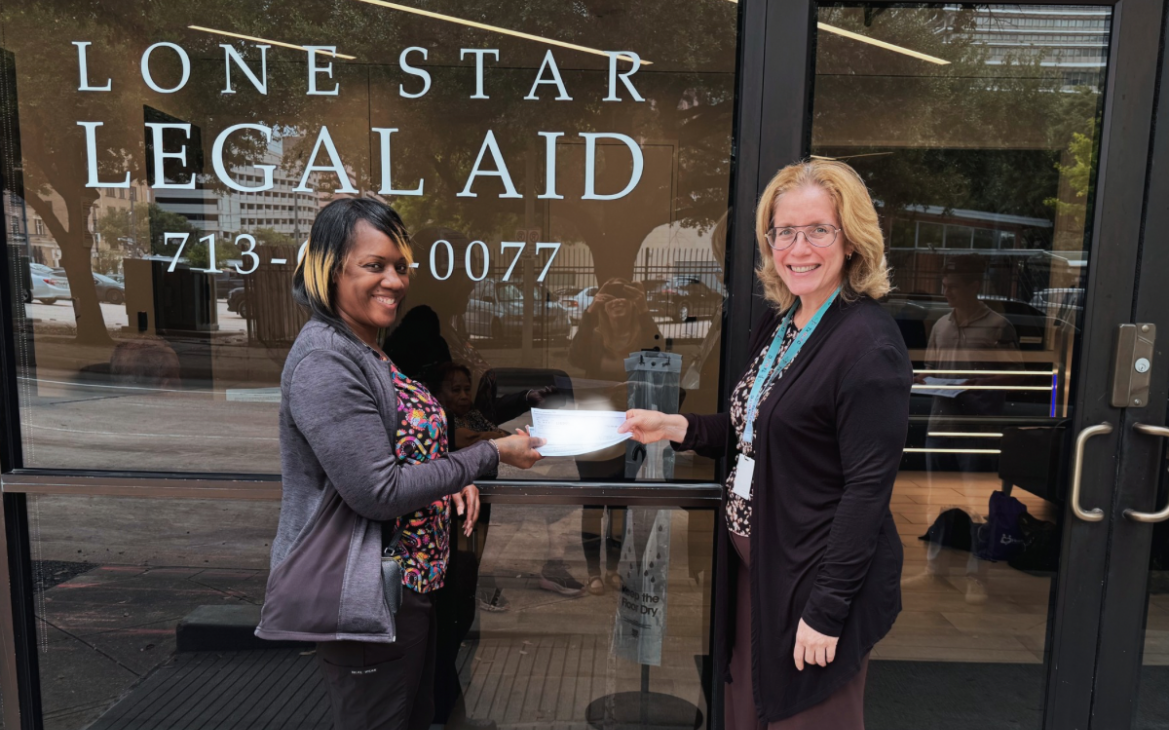
Karni worked to hold the business involved accountable and represented Ms. Buckner through a lengthy legal process that included gathering evidence, four depositions, and a formal mediation. When mediation failed to resolve the case, Karni did not give up. She continued advocating and negotiating for Ms. Buckner until the parties ultimately reached an agreement. The case ended with a settlement for Ms. Buckner, providing some financial relief after months of stress, uncertainty, and disruption to her family’s daily life.